

 JRVAL
JRVAL Jul 31 2025
The Difference Between the "Label" and the "Reality"
The Labels: NPS vs. DN (Nominal Size)
Think of NPS (Nominal Pipe Size) and DN (Diamètre Nominal) as names or identifiers, not exact measurements.
NPS: The North American standard used to identify pipe size (e.g., NPS 2).
DN: The International (metric) equivalent used in Europe and ISO standards (e.g., DN 50).
The Historical 'Why':
Early on, a "2-inch pipe" referred to its approximate Inside Diameter (ID), as flow capacity was the main concern. However, this created chaos:
- Manufacturers used different wall thicknesses for different pressures, resulting in varying Outside Diameters (OD).
- This meant pipes, valves, and fittings from different makers were not interchangeable.
The solution was to standardize the Outer Diameter (OD). The industry decided that for every nominal size (like "NPS 2"), the OD would be a fixed, constant dimension. The old name was kept, but its meaning changed from a dimension to a standard identifier.
Handling Pressure: The Role of Schedule (SCH)
Since the OD is fixed, how are pipes made for different pressures? By changing the wall thickness. This is designated by a "Schedule" (SCH) number.
- Schedule 40 (SCH 40): A standard wall thickness.
- Schedule 80 (SCH 80): A heavier, thicker wall for higher pressure.
Crucially, an NPS 2 pipe—whether SCH 40 or SCH 80—always has an OD of 2.375 inches. The thicker wall of the SCH 80 pipe simply results in a smaller Inside Diameter (ID).
The Reality: Physical Dimensions
While NPS and DN are for identification, engineers need precise physical measurements. The way a dimension is written communicates its required precision.
Fractional (e.g., 2 ½"): This is "field language." It's a quick, convenient nickname used for verbal communication. It lacks engineering precision because it does not specify the required manufacturing tolerance (the allowable margin of error).
Decimal (e.g., 2.500"): This is "engineering language," essential for drawings and manufacturing. The number of decimal places defines the required precision and tolerance:
- 2.5" implies a standard tolerance (e.g., ±0.01").
- 2.50" implies a tighter tolerance (e.g., ±0.005").
- 2.500" implies a very high-precision requirement (e.g., ±0.001").
Metric (mm): The absolute physical measurement. This is the Outer Diameter (OD) you would measure with calipers.
The Engineer's Instruction
When an engineer specifies 2.375" on a drawing for an NPS 2 pipe's OD, they are issuing a precise instruction: "This dimension must be controlled to a tolerance in the thousandths of an inch." Machinists and inspectors use this level of precision to select the right tools and ensure quality.
Key Takeaway: The Outer Diameter (OD) for any NPS size is an absolute, constant value. The Inner Diameter (ID) changes based on the wall thickness (Schedule), which determines the pipe's pressure rating.
Common Mistakes & Engineering Traps
Avoid these frequent errors when specifying piping components.
The NPS 14 Transition Trap
The Reality:
Small Bore (NPS 1/8 to 12): NPS does NOT equal OD. (e.g., NPS 12 is 12.75" OD).
Large Bore (NPS 14+): NPS DOES equal OD. (e.g., NPS 14 is exactly 14.00" OD).
Designers often assume NPS 12 is 12.00", which leads to fabrication errors.
Confusing Pipe vs. Tube
The Reality:
Tube is measured by exact OD (1" Tube = 1.00" OD).
Pipe is measured by Nominal ID (NPS 1 Pipe = 1.315" OD).
They are not compatible without special adapters.
Mathematical Conversion vs. Standard
The Reality: Never simply multiply NPS by 25.4 to get the metric OD for sizes under NPS 14. Always consult the standard chart (below).
Wrong: 3" x 25.4 = 76.2mm.
Right: NPS 3 OD = 88.9mm.
Pipe Size Calculator
*Note: This calculator uses mathematical conversion (1 inch = 25.4 mm). For Actual Pipe ODs under NPS 14, please refer to the chart below.
Pipe Diameter Coversion Table & Actual OD Chart
This table lists the Actual Physical Outside Diameter per ASME B36.10M/ B36.19M. The "Metric OD" column represents the real-world dimension used for fabrication.
| NPS (Inch) | DN (Metric) | Actual OD (mm) | Actual OD (in) |
|---|---|---|---|
| 1/16" | DN 3S2 | 7.94 mm | 0.3125" |
| 1/8" | DN 6S1 | 10.3 mm | 0.405" |
| 1/4" | DN 8S1 | 13.7 mm | 0.540" |
| 3/8" | DN 10S1 | 17.1 mm | 0.675" |
| N/A | DN 12S3 | 19.0 mm | 0.748" |
| 1/2" | DN 15S1 | 21.3 mm | 0.840" |
| N/A | DN 16S3 | 22.4 mm | 0.882" |
| 3/4" | DN 20S1 | 26.7 mm | 1.050" |
| 1" | DN 25S1 | 33.4 mm | 1.315" |
| 1 ¼" | DN 32S1 | 42.2 mm | 1.660" |
| 1 ½" | DN 40S1 | 48.3 mm | 1.900" |
| 1 ¾" | DN 45S3 | 44.5 mm | 1.750" |
| 2" | DN 50S1 | 60.3 mm | 2.375" |
| 2 ½" | DN 65S1 | 73.0 mm | 2.875" |
| N/A | DN 70S3 | 76.1 mm | 2.996" |
| 3" | DN 80S1 | 88.9 mm | 3.500" |
| 3 ½" | DN 90S2 | 101.6 mm | 4.000" |
| 4" | DN 100S1 | 114.3 mm | 4.500" |
| 5" | DN 125S2 | 141.3 mm | 5.563" |
| 6" | DN 150S1 | 168.3 mm | 6.625" |
| 6" | DN 160S2 (Metric) | 168.3 mm | 6.625" |
| 7" | DN 175S3 | 193.7 mm | 7.625" |
| 8" | DN 200S1 | 219.1 mm | 8.625" |
| 9" | DN 225S3 | 244.5 mm | 9.625" |
| 10" | DN 250S1 | 273.0 mm | 10.75" |
| 12" | DN 300S1 | 323.8 mm | 12.75" |
| TRANSITION POINT: FROM NPS 14 ONWARDS, NPS × 25.4 = OD (mm) | |||
| 14" | DN 350S1 | 355.6 mm | 14.00" |
| 16" | DN 400S1 | 406.4 mm | 16.00" |
| 18" | DN 450S1 | 457.2 mm | 18.00" |
| 20" | DN 500S1 | 508.0 mm | 20.00" |
| 24" | DN 600S1 | 609.6 mm | 24.00" |
| 28" | DN 700S1 | 711.2 mm | 28.00" |
| 30" | DN 750S1 | 762.0 mm | 30.00" |
| 32" | DN 800S1 | 812.8 mm | 32.00" |
| 36" | DN 900S1 | 914.4 mm | 36.00" |
| 40" | DN 1000S1 | 1016.0 mm | 40.00" |
| 48" | DN 1200S1 | 1219.0 mm | 48.00" |
| 60" | DN 1500S1 | 1524.0 mm | 60.00" |
| 80" | DN 2000S1 | 2032.0 mm | 80.00" |
| 96" | DN 2400S1 | 2438.4 mm | 96.00" |
| 112" | DN 2800S1 | 2844.8 mm | 112.00" |
| 144" | DN 3600S1 | 3657.6 mm | 144.00" |
| 150" | DN 3800S2 | 3810.0 mm | 150.00" |
| 156" | DN 3900/ DN4000S2 | 3962.4 mm | 156.00" |
| 160" | DN 4000S2 | 4064.0 mm | 160.00" |
| 168" | DN 4200S2 | 4267.2 mm | 168.00" |
| 172" | DN 4400S2 | 4368.8 mm | 172.00" |
| 180" | DN 4500S2 | 4572.0 mm | 180.00" |
| 192" | DN 4800S2 | 4876.8 mm | 192.00" |
| 200" | DN 5000S2 | 5080.0 mm | 200.00" |
|
Engineering Note: The "Actual OD" listed is the standard dimension per ASME B36.10M. For large bore sizes (>DN1000), manufacturing tolerances and ovality become critical factors. Always confirm precise dimensions on the "General Arrangement" (GA) drawing before fabrication. A Note on Non-Standard Sizes (e.g., NPS 7, 9): The Outer Diameters for these sizes are not calculated by simply multiplying the NPS value by 25.4. For example, 7" × 25.4 = |
|||
Global OD Systems & Market Differences
Serving the Middle East, Asia, and Europe requires navigating three distinct sizing systems. A mismatch (e.g., DN65) can cause installation failures.
ASME / ASTM (Imperial System)
Primary Markets: Global, USA, GB Series Ⅰ, Middle East, Oil&Gas, SE AsiaStandard: ASME B36.10M/ B36.19M
The absolute global standard for the Oil & Gas and Petrochemical industries.
Although it uses "NPS" (Inches), it is the dominant standard used by Korean EPCs for international projects and widely adopted in Singapore and Malaysia.
Key Feature: DN50 = 60.3mm, DN65 = 73.0mm.
ISO Metric / EN (Metric System)
Primary Markets: Europe, GB Series Ⅱ, South America, RussiaStandard: EN 10220 / ISO 4200 (Metric Series)
Often referred to as the "Metric" standard. While older national specifications (like Germany's DIN 2448) have been replaced by the harmonized EN 10220 standard, the distinct outer diameters remain.
Common in Waterworks, HVAC, and general construction in Europe and China.
Key Feature: DN50 can be 57.0mm or 60.3mm, DN65 is 76.1mm.
JIS / KS (Asian System)
Primary Markets: Japan, South KoreaStandard: JIS G3452 / KS D 3507
The Japanese (JIS) and Korean (KS) systems are nearly identical.
These are standard for domestic construction, shipbuilding, and water treatment in East Asia. Also common in Japanese-funded factories in Vietnam and Thailand.
Note: While high-pressure pipes (STPG) often match ASME ODs, low-pressure water pipes (SGP) have slight differences
OD Comparison Chart
Yellow = Dimensions Differ (Check carefully)
Red = Major Conflict Area
| NPS | DN | ASME / ASTM (USA, Middle East, SE Asia) |
ISO Metric / EN (Europe, GB Ser.II) |
JIS / KS (Japan, Korea, Asia) |
|---|---|---|---|---|
| 1/2" - 1" | DN15 - 25 | Safe / Compatible (Difference < 0.5mm) | ||
| 1 1/4" | DN 32 | 42.2 mm | 42.4 mm | 42.7 mm |
| 1 1/2" | DN 40 | 48.3 mm | 48.3 mm | 48.6 mm |
| 2" | DN 50 | 60.3 mm | 60.3 / 57.0 mm (!) Metric Series 1/ Series 2 |
60.5 mm |
| 2 1/2" | DN 65 ! | 73.0 mm Standard Pipe |
76.1 mm Metric / Fire System |
76.3 mm JIS/KS Standard |
| 3" | DN 80 | 88.9 mm | 88.9 mm | 89.1 mm |
| 4" | DN 100 | 114.3 mm | 114.3/ 108.0 mm (!) Metric Series 1/ Series 2 |
114.3 mm |
| 5" | DN 125 | 141.3 mm | 139.7/ 133.0 mm Metric Series 1/ Series 2 |
139.8 mm |
| 6" | DN 150 ! | 168.3 mm ASME Standard |
165.1/ 159.0 mm ! Metric Series 1 /Series 2 |
165.2 mm ! JIS (SGP) |
| 8" | DN 200 | 219.1 mm | 219.1 mm | 216.3 mm (!) |
| 10" | DN 250 | 273.0 mm | 273.0 mm | 267.4 mm (!) |
| 12" | DN 300 | 323.8 mm | 323.9 mm | 318.5 mm (!) |
| 14" + | DN 350 + | Matches EN/ISO | Matches ASME | Often matches ASME Check Spec |
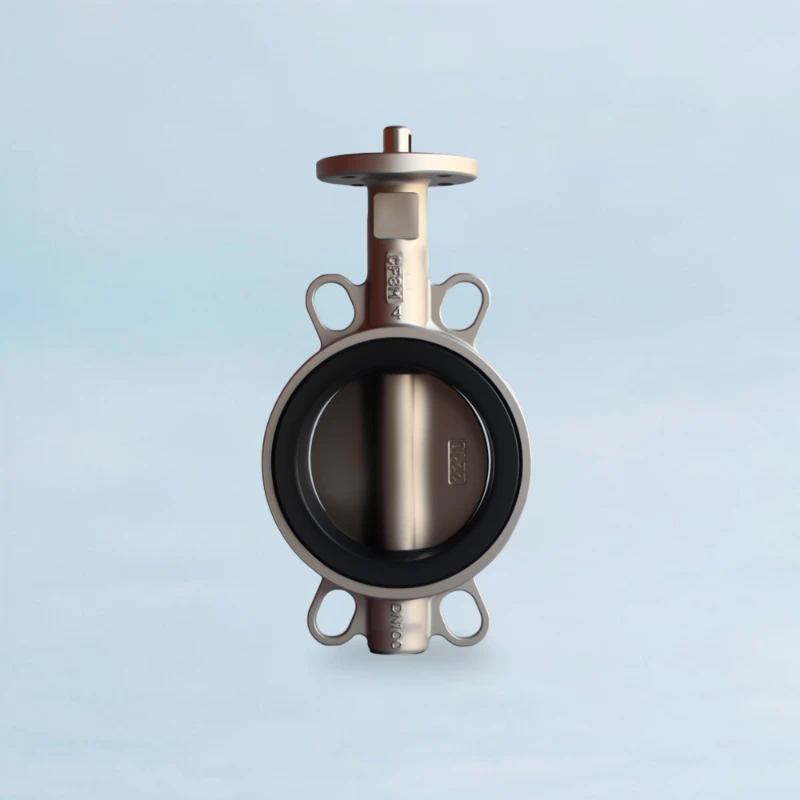
Our Universal-Fit Butterfly Valve Solution
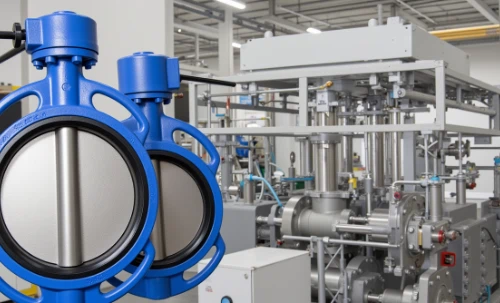
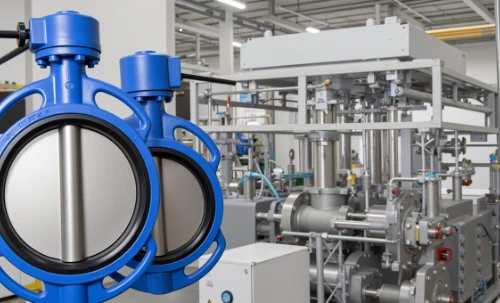
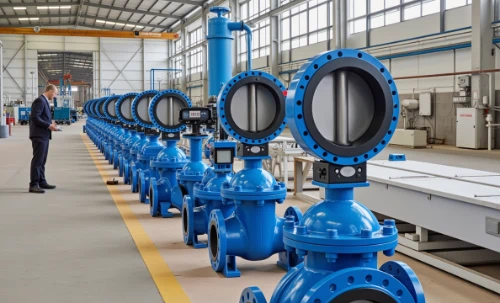
The conflicts between ASME, EN, and JIS standards, especially at DN65 and DN150, are a major source of procurement errors. Our universal lug and wafer type butterfly valves are engineered to solve this.
-
Multi-Standard Flange Compatibility: Body design accommodates ASME, EN, and JIS flanges.
-
Guaranteed Fit: Eliminates the risk of ordering the wrong valve for your pipe system.
-
Factory-Direct Pricing: As the source manufacturer, we offer competitive pricing and full technical support.
PROCUREMENT TIP: Korea & Middle East
- Middle East (Aramco, ADNOC): Almost exclusively use ASME B36.10M. Ensure your Valve Bodies are compatible with ASME Class 150.
- Korean EPCs: Often purchase globally. Always confirm if the project spec requires "Metric OD" (ISO/EN) or "NPS OD" (ASME).
- The "DN65 & DN150" Trap: Always double-check pipe OD. A "DN150" pipe in Europe (159mm) is totally different from Saudi Arabia (168.3mm).
(Note: Our Universal Butterfly Valves are designed to fit both!)
Expert Insights: Understanding the Nuances of Pipe Sizing
Beyond the numbers, a deeper understanding of industry terminology and standards is key to accurate specification. Here are some critical distinctions that can prevent costly errors and streamline procurement.
Does Material Affect OD?
Generally, No. To ensure fittings (flanges, elbows) fit, the Outer Diameter (OD) is standardized across materials (Carbon Steel, Stainless, PVC) per ASME/ASTM standards.
Note: While OD stays the same, the Inside Diameter (ID) changes based on the Schedule (Wall Thickness) or SDR rating.
DN Sizing: Preferred vs. Second Series
International standards, particularly European ones (like EN 1092-1), classify DN sizes into two categories to simplify and standardize flange and valve connections.
Series I (Preferred Sizes): These are the most commonly used and recommended sizes, such as DN50, DN80, DN100, DN150, etc. They represent the vast majority of sizes in our chart and are the standard for new designs.
Series II (Secondary Sizes): This includes less common sizes like DN90, DN175, DN225, etc. While not recommended for new designs due to limited availability of components, they are specified for compatibility with older systems or unique engineering requirements.
Why It Matters: This knowledge demonstrates an understanding of the underlying standards beyond simple conversion. It allows us to guide clients toward more universal, available, and cost-effective solutions by prioritizing preferred series sizes.
Large Bores: The Nature of 'Engineered to Order' (ETO)
For sizes above DN1000 (NPS 40), and especially beyond DN2000 (NPS 80), pipes and valves are typically not off-the-shelf products.
Engineered to Order (ETO): These components are custom-manufactured to meet specific project requirements. Exact dimensions, tolerances, materials, and testing protocols must be determined based on detailed engineering drawings and applicable manufacturing standards.
Why It Matters: It clarifies that these items are not standard stock and require significant lead time for technical consultation, design, and fabrication.

Found Your Pipe Size? Now Find the Perfect Valve.
Don't let standard mismatches or sizing errors delay your project. As a primary manufacturer, we provide butterfly valves that precisely match all major global standards, including ASME, EN, and JIS.
GET A TECHNICAL CONSULTATION