

 JRVAL
JRVAL Feb 14 2026
As a leading valve manufacturer, we combine decades of factory expertise with real-world feedback from the engineering community to give you this definitive guide.
1. The "STAMP" Selection Framework
here is a simple formula to help you quickly remember the key elements of valve selection before looking at any catalog.
Don't just match pipe size. For control valves, calculate the Cv Value.
Determines seat materials.
Soft (EPDM/PTFE) < 150°C
Metal > 200°C.
Isolation (On/Off)?
Throttling (Control)?
Non-Return?
Liquid, Gas, or Slurry? Abrasive media requires hardened discs.
Confirm your pipeline pressure standard. High pressure often rules out Wafer styles.
2. Deep Analysis: Comparison of 4 Main Valves
Here is how the main industrial valves stack up based on factory testing and field feedback.
Butterfly Valves
Best for Large Pipes & Limited SpaceThe solution for modern industrial piping. Unlike bulky Gate valves, the Butterfly valve is quarter-turn, lightweight, and cost-effective.
- Compact Wafer/Lug design saves installation space.
- Most cost-effective for lines > 4 inches.
- Available in resilient soft seats (Bubble-tight) or High-Performance Metal seats.
- The disc sits in the center of the pipe even when open, creating slight flow resistance.
- Cannot be used with mechanical pipe cleaning tools (PIGs) due to obstruction.
Ball Valves
Best for Small Lines & Tight Shut-off- Excellent sealing (Class VI Leakage).
- Full bore options mean zero pressure drop.
- Fast 1/4 turn operation.
- Fluid gets trapped in the body cavity (freeze/contamination risk).
- Water Hammer Risk: Closing too fast can rupture pipes.
Gate Valves
Best for Steam & High Pressure- Slow closing naturally prevents Water Hammer.
- Reliable metal-to-metal seating for high heat.
- Requires significant vertical space.
- NEVER use for throttling (Vibration will destroy it).
Knife Gate Valves
Best for Slurry & SolidsA specialized variation of the Gate valve featuring a sharpened blade (gate). It is designed specifically to cut through thick liquids, wastewater, pulp, and solids that would jam a standard valve.
Unlike standard models, JRVAL engineered Knife Gate Valves achieve Bi-Directional Zero Leakage and require no specific installation direction.
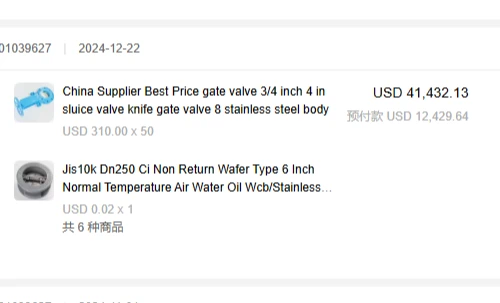
Client Reference: HY Frontier Co. (Korea)
- Cutting Action: Beveled edge slices through obstructions (pulp, plastic, sludge).
- Non-Clogging: Full bore design prevents solids from building up in the seat.
- Compact Face-to-Face dimension.
- Low Pressure Limits: Generally designed for PN10/16.
- *Standard models are often Unidirectional, Must be installed facing the correct flow direction to seal properly. (See JRVAL upgrade above).
- Not suitable for gases requiring zero leakage. (See JRVAL upgrade above)
Globe Valves
Best for Flow Regulation- Linear flow characteristics for precise control.
- Easy to maintain/replace trim in-line.
- High pressure drop due to S-shaped flow path.
- More expensive and heavier than rotary valves.
3. Performance Comparison
Based on Reddit discussions and standard industry feedback, here is how they perform side-by-side.
| Valve Type | Flow Control (Throttling) | Shut-Off Tightness | Low Pressure Drop | Cost Efficiency (Large Sizes) |
|---|---|---|---|---|
| Butterfly Valve | ★★★☆☆ | ★★★★☆ | ★★★★☆ | ★★★★★ |
| Ball Valve | ★☆☆☆☆ | ★★★★★ | ★★★★★ | ★★☆☆☆ |
| Globe Valve | ★★★★★ | ★★★★☆ | ★★☆☆☆ | ★★☆☆☆ |
| Gate Valve | ☆☆☆☆☆ (Do not use!) | ★★★★☆ | ★★★★★ | ★★★☆☆ |
| Knife Gate Valve | ★☆☆☆☆ | ★★★☆☆ (Depends on solids) | ★★★★★ | ★★★★☆ |
*Note: Butterfly valves offer the best balance of performance vs. price for pipe diameters of 4 inches (DN100) and above.
4. The Technical Details (Specs & Materials)
Understanding Leakage Standards (ANSI/FCI 70-2)
- Class IV: Standard metal-to-metal seal (e.g., Gate Valves). Minimal leakage allowed.
- Class VI: "Bubble-tight" shutoff. Achieved by Soft-seated Butterfly and Ball valves. Essential for dangerous chemicals or strict isolation.
Material Selection Guide
Choosing the body and seat material is just as important as the valve type.
Seat Materials
- EPDM: Great for Water, HVAC (-20°C to 120°C).
- FKM (Viton): Best for Oils and Hydrocarbons at high temps.
- PTFE (Teflon): The choice for Chemicals & Acids.
- Silicone (SIL): Ideal for Food/Pharma & High Heat.
- Hypalon (CSM): Excellent resistance to chemicals and ozone.
- Metal (Stellite): For Steam, Slurry, or temps > 200°C.
Body Materials
- Cast Iron (GG25): Low pressure, general water.
- Ductile Iron (GGG40): Stronger, industrial standard.
- Carbon Steel (WCB): Standard for high pressure and temperature oil/gas lines.
- Stainless Steel (CF8M): Food grade, corrosive environments, or marine use.
The Danger of Speed: Ball valves close very fast (Quarter-turn). In long liquid lines, closing a valve too quickly creates a pressure shockwave (Water Hammer) that can rupture pipes.
The Solution: If using a Ball or Butterfly valve in a high-pressure line, use a Gear Operator or an Electric Actuator with a slow closing time to dissipate energy safely.
5. Case Study: MVR Compressor Bypass Control
Understanding Typical MVR Conditions
Based on our extensive project experience with Mechanical Vapor Recompression (MVR) systems, we understand the critical parameters of the compressor discharge (secondary steam):
- Discharge Temp:
120°C - 160°C (Superheated) - Pressure Drop (ΔP):
30 - 80 kPa - Saturation Rise:
8°C - 20°C
The "Micro-Throttling" Challenge (2-3% Opening)
For bypass lines requiring continuous micro-throttling, the ideal technical solution is a Globe Control Valve. However, for large pipe diameters, Globe valves are often too costly and bulky.
The Cost-Effective Alternative: A Modulating Butterfly Valve.
But correct selection is critical based on your medium and leakage requirements:
- Recommendation: Soft-Seated Modulating Butterfly Valve.
- Material: Viton (FKM), or PTFE.
- Advantages:
- Achieves Zero Leakage (Class VI).
- Modulating Actuator: Controls flow rate, opening time, and provides real-time position feedback.
- Cost-effective compared to Metal seats.
Recommendation: Triple Offset Metal-Seated Valve.
Why: Soft seats will fail above 150°C or in acidic/sulfide environments. Metal seats withstand the erosion of high-velocity steam.
Trade-off: Metal seats are typically Class IV/V Leakage (not bubble-tight). If strict zero-leakage is required, Butterfly valves may not be suitable.
Warning: While Butterfly Valves are excellent for regulation, operating at 2-3% opening creates extremely high steam velocity (Wire Drawing effect). This can erode the valve seat if the Pressure Drop (ΔP) is too high.
Before ordering: Please provide us with your Inlet Pressure (P1) and Outlet Pressure (P2). Our engineering team will calculate the Kv value and confirm if a Butterfly Valve can handle your specific ΔP without cavitation damage.
6. Summary: The Selection Cheat Sheet
Save this list. If you are unsure, these are the standard engineering defaults.
Still Unsure? Ask the Manufacturer.
Textbook theory is great, but nothing beats 20 years of manufacturing experience. We can calculate the exact Torque, Cv, and Material compatibility for your project.
Contact Our Engineering Team
Disclaimer: This guide is for educational purposes. Always consult local codes (ASME/ANSI/ISO) for critical applications.
Get a quote for Butterfly, Knife Gate, and Check valves within 24 hours.



![Top 10 Butterfly Valve Manufacturers in the World [2025]](/uploadfile/2026/01/22/202601221729251CSe9A.webp)